Collection: Hand Painted Dakini and Yogini Thangka Paintings

Dakini and Yogini thangkas are some of the most striking paintings in Tibetan Buddhist art: dancing, fearless feminine figures who stand for wisdom, transformation and freedom. Whether you are drawn to the fiery Vajrayogini, the magnetic red Kurukulla or the powerful Vajravarahi, you will find a hand painted thangka here. Our artists in Boudha, Kathmandu paint each one in the traditional way, and a monk blesses it before it ships. Choose your deity below, or message us and we’ll help you decide. We also paint to order. New to the dakinis? Start with our guide to the Dakinis and female embodiments of wisdom.

    Choose your Dakini or Yogini

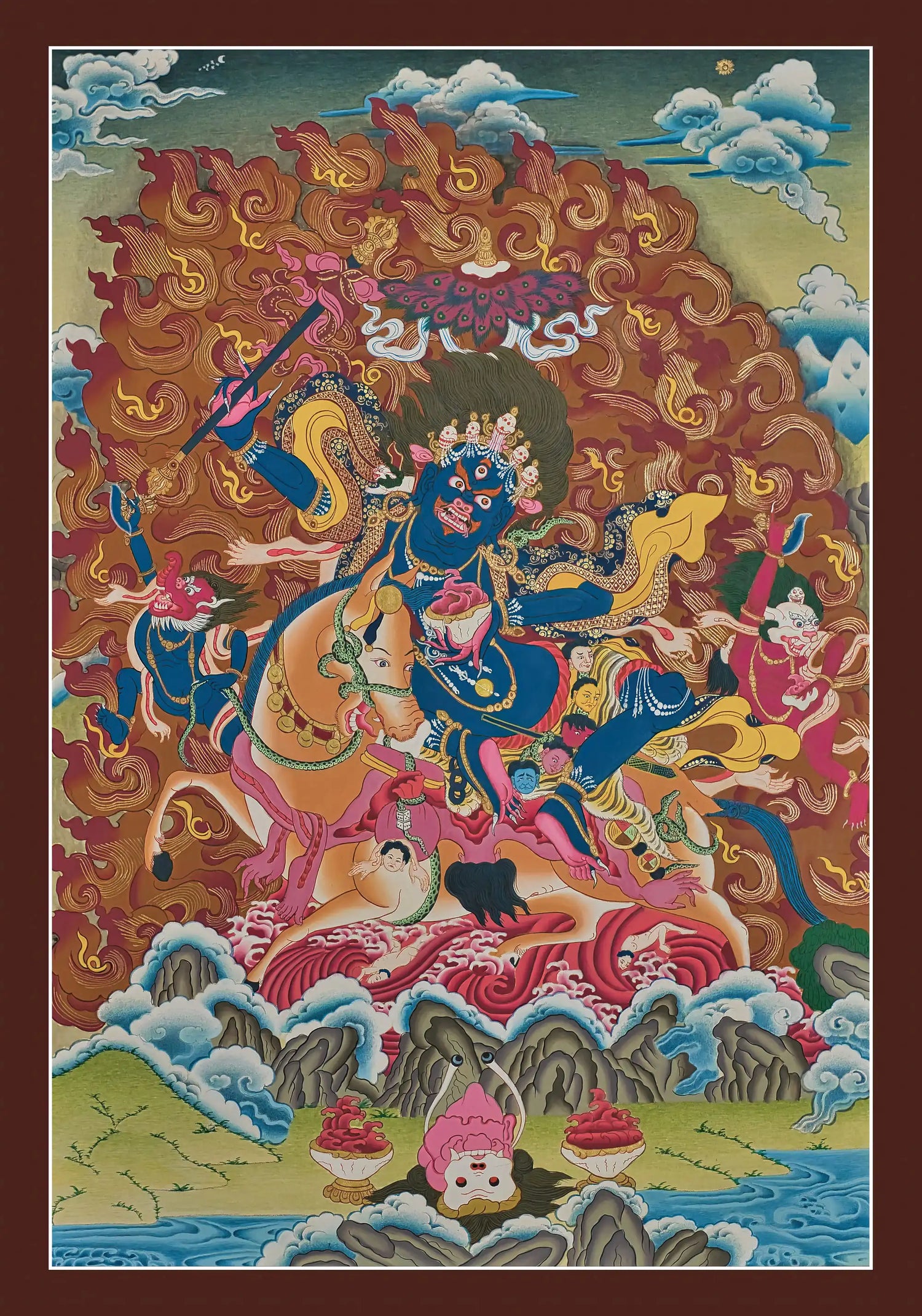
    Vajrayogini thangka: the fierce red dakini of transformation. The best known of the three. Vajrayogini is painted dancing in a blaze of wisdom fire, holding a curved knife and a skull cup, symbols of cutting through ignorance and transforming it into wisdom. Our collection includes the Naro Khechari form of Vajrayogini, shown with four attendant forms and a flame aura. Choose this one if you want a powerful central image for your practice or altar. Browse our Vajrayogini thangkas.

    Kurukulla thangka: the red dakini who draws in what is beneficial. Kurukulla is a red deity of enchanting, magnetizing activity, shown with a bow and arrow made of flowers. She is associated with attracting good conditions, harmony, goodwill and prosperity. Choose this one if you are drawn to the gentler, more magnetic side of dakini energy. Browse our Kurukulla thangkas.

    Vajravarahi thangka: the Diamond Sow. In many traditions Vajravarahi is a form of Vajrayogini, often painted with a small sow’s head at the side of her own head. She stands for the wisdom that cuts through ego and confusion. Choose this one if you want a rarer, more striking subject. Browse our Vajravarahi thangkas.

    A quick guide to choosing

    • For a powerful practice or altar centerpiece: Vajrayogini.
    • For harmony, goodwill and a magnetic presence: Kurukulla.
    • For a rare image of wisdom cutting through ego: Vajravarahi.
    • Not sure? Read how to choose the right Buddhist thangka, try our Pick Your Thangka guide, or send us a photo of your space and tell us what draws you, and we’ll suggest a deity and a size.

    What Dakinis and Yoginis represent

    “Dakini” is often translated as “sky-goer”, a feminine embodiment of enlightened wisdom and energy. Dakinis cut through illusion and guide practitioners toward transformation, which is why they are painted in dynamic, dancing poses, often surrounded by flames. A Yogini is a female adept, a woman who has realized deep meditation and the union of wisdom and compassion. In Tibetan art the two are closely linked, and the same figure can be called either.

    These paintings are not decoration alone. They are traditionally used to inspire fearlessness, to clear obstacles and to remind practitioners of their own inner strength.

    A note on practice and respect

    Many dakini deities, including Vajrayogini and Vajravarahi, belong to Vajrayana tantric practice, which is traditionally taught by a qualified teacher after an empowerment. You do not need to practice to appreciate or display a thangka of these figures, and many people keep them as sacred art and as an expression of respect for the tradition. If you do practice, or want to, ask your teacher how to place and care for the image. We are glad to answer questions about the iconography.

    Who these thangkas are for

    • Practitioners who need a proper image of their practice deity for an altar or shrine room.
    • Collectors of Tibetan art who want a striking, less common subject.
    • Buyers who connect with the feminine in Buddhism and want a powerful image of wisdom and fearlessness.
    • Gift buyers looking for a meaningful piece for a practitioner. See our guide to thangka art as a gift for spiritual milestones.

    Why buy from Buddha’s Art of Healing

    • Painted by hand, never printed. Each thangka is made by skilled artists in the traditional way. Meet our artists, or see how a thangka is made.
    • Blessed by a monk before it leaves our gallery.
    • Made at the source, at our gallery by Boudhanath Stupa in Kathmandu, and operating since 1976. Read our story.
    • Made your way. Ask for a custom size, a specific form of the deity or a silk brocade mount through our commission page.
    • Shipped worldwide with tracking and insurance, rolled and wrapped in protective silk. See our shipping policy.
    • Easy to verify. Our guide to authentic vs replica thangkas shows how to tell an original from a print.

    Displaying your thangka

    Hang it at or above eye level in a clean, quiet place, never on the floor. Our Buddhist altar setup guide shows how to arrange an altar around it. A silk brocade mount gives the traditional border, and why brocade matters in a thangka explains the tradition behind it.

    More to explore

    For the Buddhas and deities who sit alongside the dakinis, browse our Buddhism deities thangkas, Bodhisattva thangkas and Guru Rinpoche thangkas.

    Learn What Each Dakini & Yogini Thangka Offers You!

    Simplifying Your Search

    Vajrayogini Thangka

    Fierce wisdom Dakini who cuts through illusion and leads to ultimate liberation.

    Kurukulla Thangka


    Dakini of magnetizing energy, attracting positive forces and influence.

    Vajravarahi Thangka


    Powerful protector embodying strength, vitality, and fearless realization.

    FAQs for Hand Painted Dakini and Yogini Thangka Paintings

    What makes a Dakini thangka unique?

    Dakini thangkas embody fierce feminine wisdom and enlightened energy. They are painted as dynamic, dancing figures who cut through illusion and guide practitioners toward transformation.

    What does a Yogini thangka represent?

    A Yogini thangka portrays a powerful female adept who embodies deep meditation, spiritual mastery and the union of wisdom and compassion.

    Is there a difference between a Dakini and a Yogini?

    The two are closely linked and the names are often used for the same figure. A dakini is the “sky-goer”, an embodiment of enlightened wisdom. A yogini is a female adept who has realized that wisdom through practice.

    How can a Dakini thangka help my spiritual practice?

    Meditating with a dakini image is traditionally said to inspire inner strength, help clear obstacles and encourage fearlessness on the path. It supports practice and does not replace a teacher’s guidance.

    Which should I choose: Vajrayogini, Kurukulla or Vajravarahi?

    Choose Vajrayogini for a powerful practice or altar centerpiece, Kurukulla for harmony and goodwill, and Vajravarahi for a rarer image of wisdom cutting through ego. If you are unsure, message us and we’ll help.

    Do I need an empowerment to own a thangka of Vajrayogini?

    No. You can display a thangka as sacred art without practicing. The practice itself is traditionally received from a qualified teacher.

    Are your thangkas hand painted and blessed?

    Yes. Our artists hand paint every thangka in the traditional way, and a monk blesses each one before it ships.

    Can I order a custom Dakini or Yogini thangka?

    Yes. Tell us the deity, form, size and mounting you want through our commission page, and we will paint it for you.

    Will it arrive safely, and what if there is a problem?

    We roll the thangka carefully, wrap it in protective silk, and ship it worldwide with tracking and insurance. If something goes wrong, read our refund policy and contact us, and we will help.

    Ready to bring one home?

    Choose your Vajrayogini, Kurukulla or Vajravarahi thangka above, or tell us the deity, size and mounting you want through our commission page and we’ll paint it for you. Questions first? Message us on WhatsApp.